Lions, and Tigers, and Dinosaurs, Oh My—Check out the Hologram Zoo
Lions, and Tigers, and Dinosaurs, Oh My—Check out the Hologram Zoo
Lions, and Tigers, and Dinosaurs, Oh My—Check out the Hologram Zoo
The Holographic Zoo is comprised of a handful of different 3D ‘set pieces’ that allow multiple participants to share a similar experience. Perhaps the most impressive is the Holographic Tunnel. It’s a 3D gallery where up to 20 people can experience the ‘holographic’ projections using the 3D glasses. Combining the ‘pace setter’ with the infrared beacons on the 3D glasses the graphics engine can display content that is appropriate to the viewer’s perspective. In other words, if the dinosaur is rearing out of the screen, one viewer can see one side of the dino’s head while the other participant can see the other side.
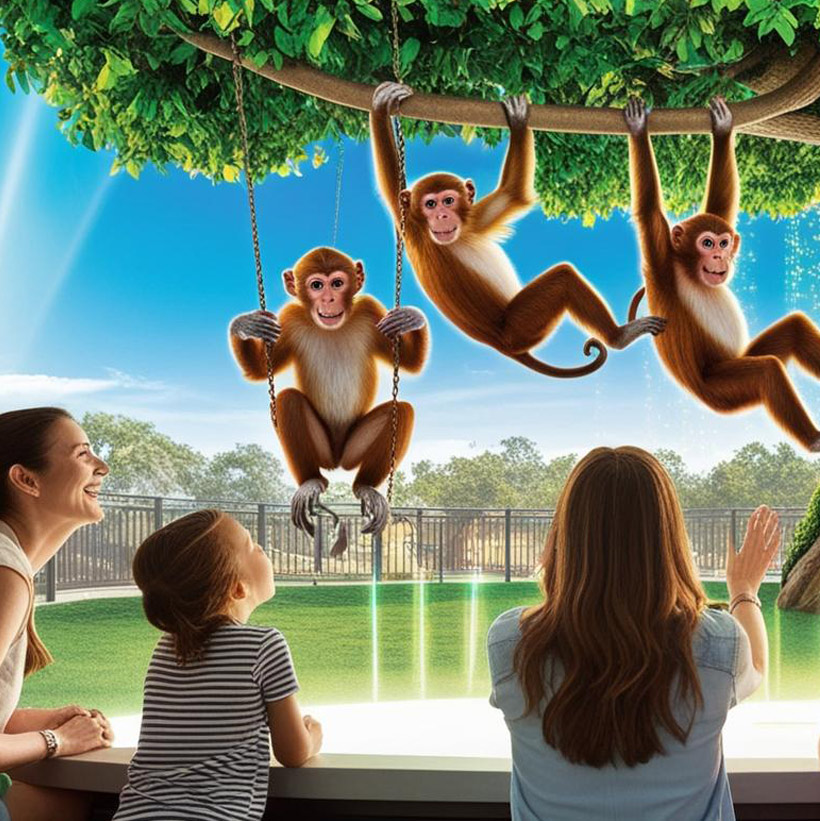
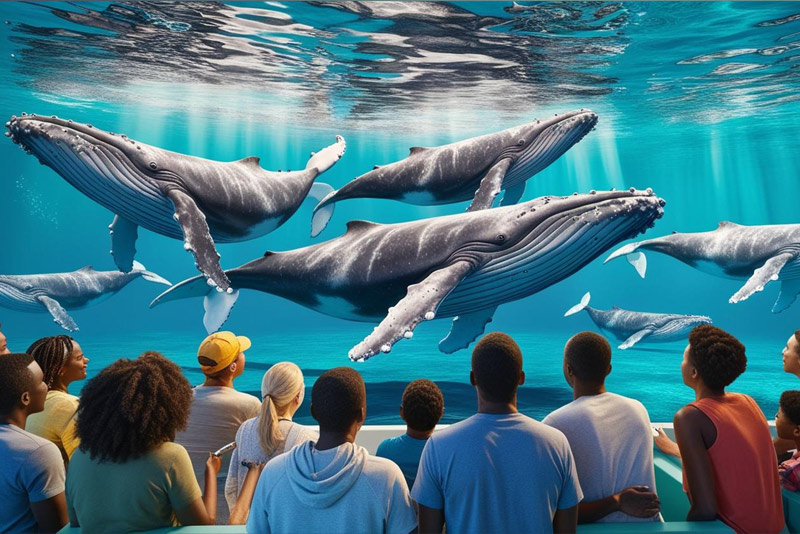
At this zoo visitors dodge stampeding elephants, peer into the gaping jaws of a hippopotamus and pat friendly giraffes. Go through new hi tech hologram tunnels where the animals come off the walls and fly around in the air with you, it is both a Zoo and an Aquarium. These tunnels project real depth so it looks like you are in another place. We also have fenced animal areas where the animals act alive and project upwards from the ground. It's educational for learning about nature and animals. Another attraction is the sky roof. In this area, you shrink down so the animals are giants they walk over the glass above you. when you visit the hologram zoo you'll go through 5 tunnels, you'll see 5 giant sky roof rooms, and 10 different fenced animals. It’s a giant indoor theme park! There are different shows where you go to different countries like Africa, the North Pole, Asia, and Australia. You can also go back in time and visit the dinosaurs.
Just like most 3D visuals, the technology behind the Hologram Zoo basically employs digital trickery to trick the brain into seeing something that isn’t really there. For a supercomputer that computes at 172,000 GHz and runs millions of processes daily (a broad oversimplification of the human brain’s computing power) just to keep us alive, the human brain is rather easily tricked. The holograms use a new depth technology that not only makes the animals seem big but makes them visible as 3D objects rather than suspended 2D images.
The Hologram Zoo projects holograms into the air using laser light, and visitors thanks to special position-tracked glasses that follow their gaze around and a powerful graphics engine, perceive the 'animals' correctly and in full depth - no matter where they move. Quite unlike a 3D movie, which 'flattens' when someone watching moves at all. Everyone in the zoo has a tailored experience.
Is it VR? Definitely not.
The biggest application for holograms I think, is in the fact that they are fun. When a giant whale swims past you everyone goes into a reverence. You see things that you've never seen before.